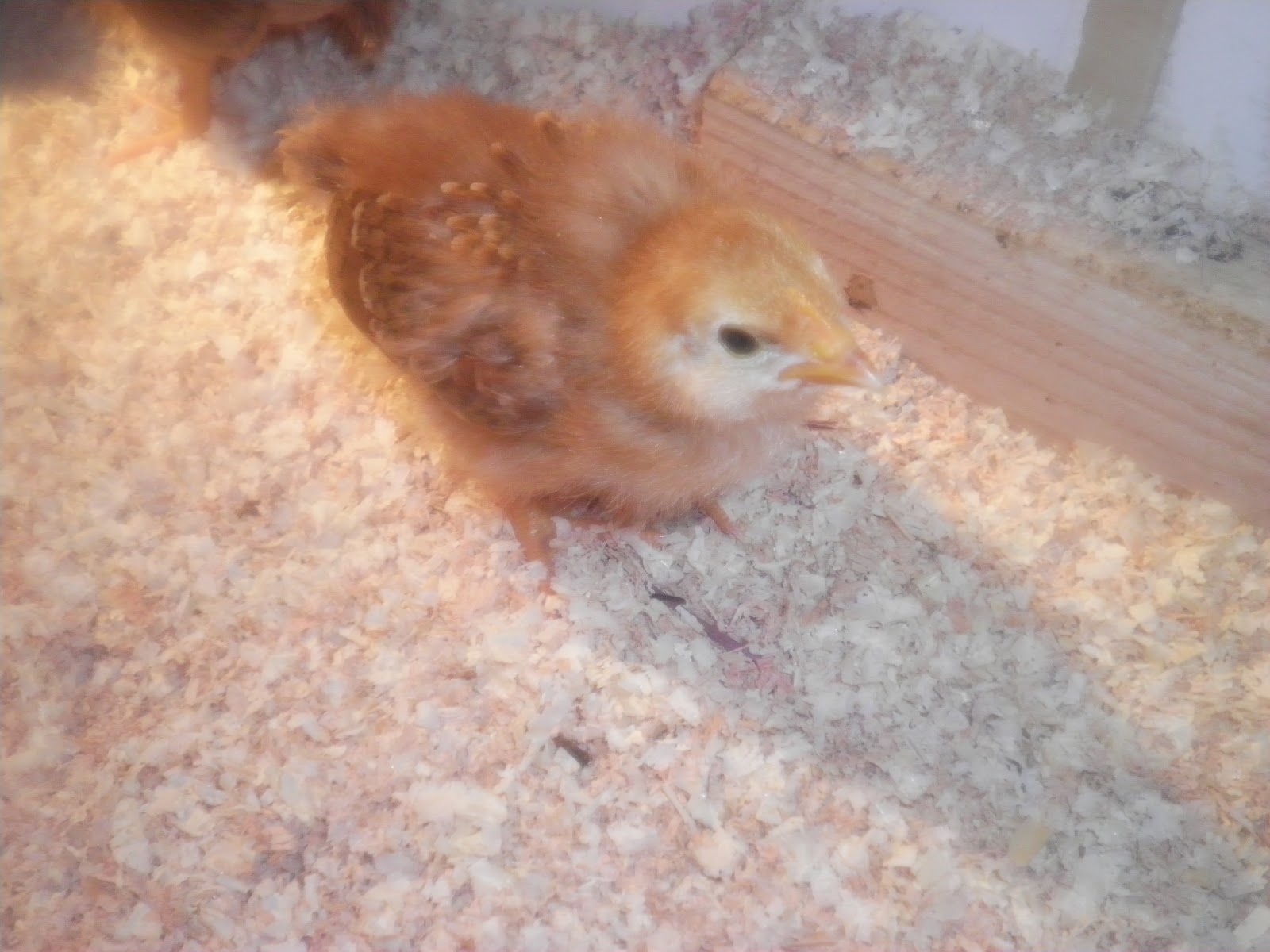
I was gong to wait until we have a place in the country to get chickens but , three weeks ago I just couldn't help myself any more. When I saw those little balls of fuzz, my heart kind of melted. And to make matters worse they were Rhode Island Reds. I have helped my dad raise hundreds of chicken, all different breeds but, I have always wanted to raise Rhode Island Reds.
From all that I have read these chickens are a dual purpose bird and very hardy in most climate conditions. They are very consistent brown egg layers and grown chickens weigh from five to seven pounds. I bought ten pullets from my local feed store. They were labeled as pullets but I am sure I will wind up with a rooster or two.
The two main requirement for raising baby chicks is a warm, dry place for them to stay. I used an old cabinet that I had in the garage for a brood box. You can use any sturdy moisture resistant box available for this purpose. Fill the bottom with wood shavings or shredded paper. I suggest wood shavings because paper needs to be changed more often. I purchased a covered feeder and a one gallon hanging waterer any shallow container will do for both of these purposes. If you go with a shallow dish, I would put some gravel in the bottom of the dish to prevent the chicks from drowning.
It's hard to know exactly what temperature these chicks want to be from one minute to the other. So, what I do is put a heat lamp in a corner of the brood box, instead of trying to heat the whole box. This way the chicks can move under the lamp if they are cold and when they are too warm they can move to the cooler parts of the brood box.
The only other things you need a good starter grower feed. Feed is very important when it comes to chicks and laying hens. Your baby chicks digestion system cant handle cracked corn or whole seeds. So, if you want healthy baby's, go ahead and spend the extra few bucks on starter grower.
After the chicks are in the brood box and the food and water is in place, all that is left to do is set back and watch the comedy. I hope this article was helpful. Thanks for reading.